Odesa is known worldwide as the “Pearl by the Sea,” a city of refined architecture and sunlit boulevards. Yet behind the façade of the Odesa National Academic Opera and Ballet Theatre and its palaces lies another story—stern, stony, and subterranean. That story begins on Shkodova Hora, where one can still see a phenomenon unique in Ukraine: an entire settlement carved directly into rock. This “cave town” of stonecutters became the literal foundation upon which Odesa was built.
Origins: From the Zaporizhian Cossacks to Imperial Builders
The history of Shkodova Hora began long before Odesa’s official founding in 1794. After the dissolution of the Zaporizhian Sich in 1775, many Cossacks did not cross the Danube River but remained in the Northern Black Sea region, which at that time belonged to the Ottoman Empire. They established settlements near Khadzhibei, the future Odesa, including areas now known as Usatove and Kryva Balka.
When the Russian Empire began constructing a major port city, the demand for building materials became urgent. Shkodova Hora proved to be a treasure trove: it consists almost entirely of coquina, a shell limestone that is soft and easy to work with yet strong and durable. It was an ideal material for urban construction.
Hundreds of workers—former Cossacks, runaway peasants, and free stonemasons—came to the slopes of the hill. Because renting land and building a conventional house was expensive, they adopted an inventive solution: they carved their homes directly into the hillside. Thus, the first cave dwellings appeared, eventually forming entire streets.
Nineteenth-Century “Stone Age” Architecture
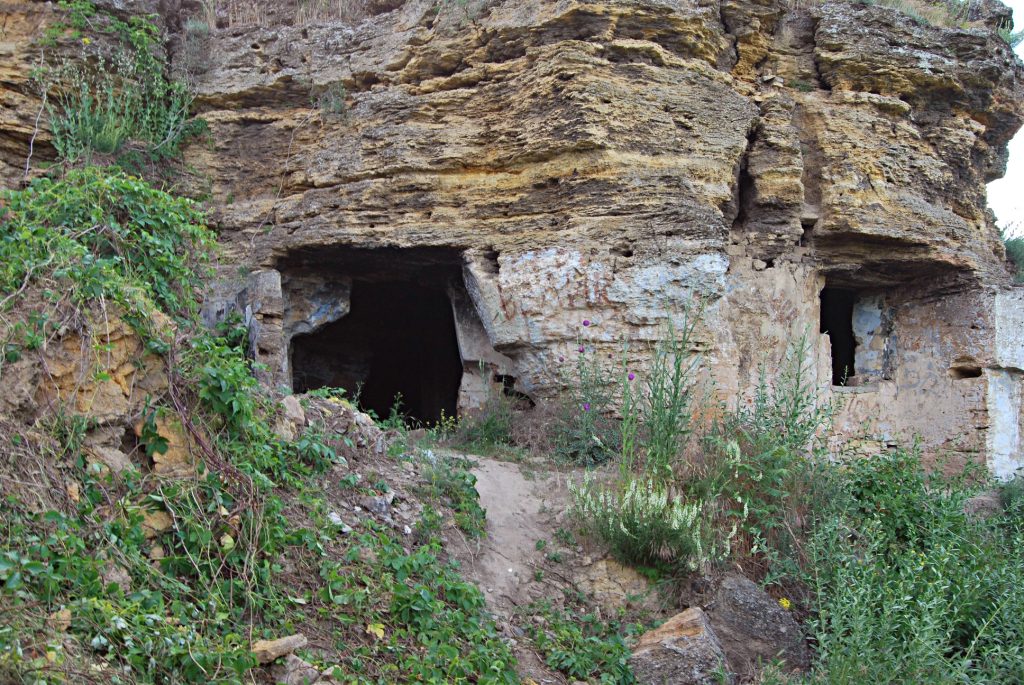
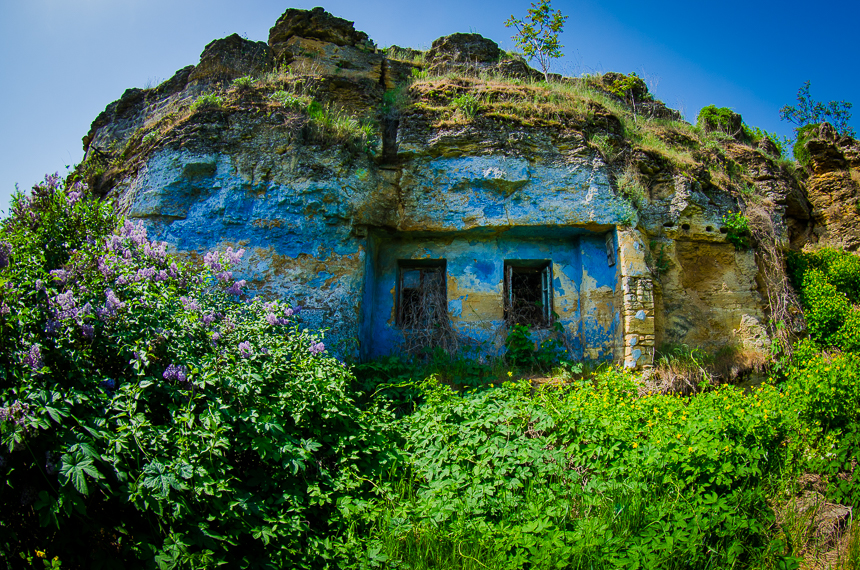
The cave houses on what is now Hladkova Street were far from primitive shelters. They represented a remarkable adaptation of the traditional Ukrainian house to a rocky landscape.
The construction process included:
Carving the façade: A vertical rock face was cut, with a doorway and two or three windows opened into it.
Forming interior rooms: Stone was removed deeper into the hill, creating living spaces of up to twenty to thirty square meters. Ceilings were typically vaulted for structural strength.
Finishing: Walls were carefully leveled and coated with a thick layer of lime plaster, which brightened the rooms and protected against moisture and mold.
Heating system: Vertical flues were carved through the rock, emerging on the plateau above. From a distance, the chimneys appeared to grow directly out of the ground, as if mythical creatures lived beneath the surface.
Inside these dwellings, a unique microclimate prevailed. Thanks to the insulating properties of limestone, temperatures remained between fifteen and eighteen degrees Celsius throughout the year. This reduced the need for firewood in winter and provided welcome coolness during the intense summer heat.
The Catacombs: Labyrinths Beneath the Surface
Beneath the residential level begin the true catacombs—former quarry tunnels where stone was extracted for sale rather than for home construction. The mines of Shkodova Hora are considered among the oldest in the Odesa region.
The stonecutters’ labor was extraordinarily demanding. They worked by the light of oil lamps, manually cutting blocks from the rock. Today, visitors can still find:
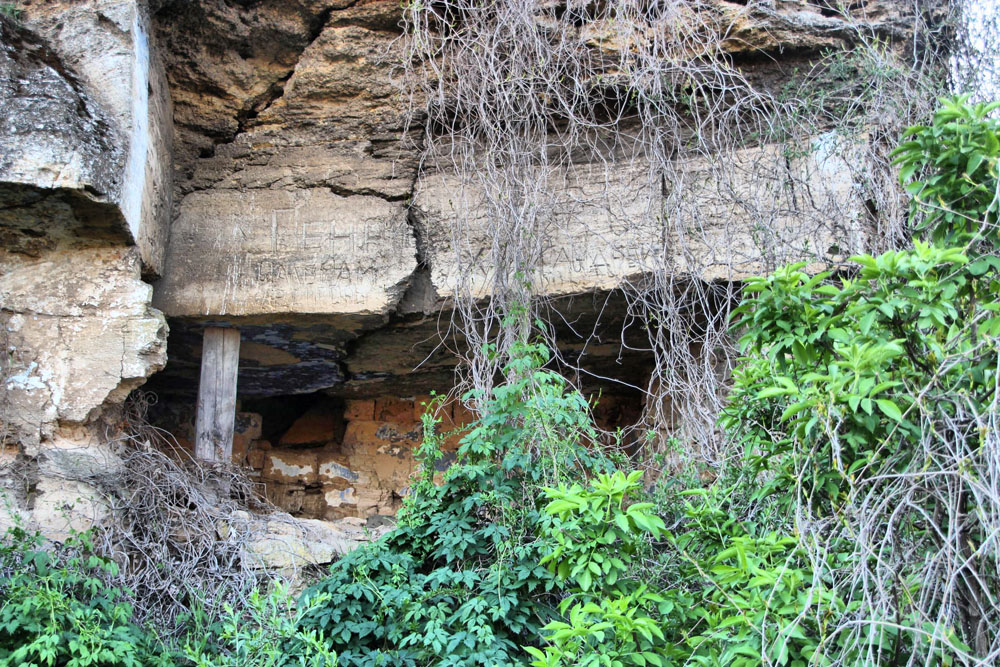
Historic graffiti: Charcoal drawings of horses and carts, records of stone deliveries, and workers’ surnames preserved on the walls.
Tool marks: Distinct incisions left by saws and pickaxes, conveying the rhythm of labor that quite literally “carved” Odesa from stone.
During the Second World War, these labyrinths served as shelters for local residents during air raids.
A Cultural Landmark and the Cossack Cemetery
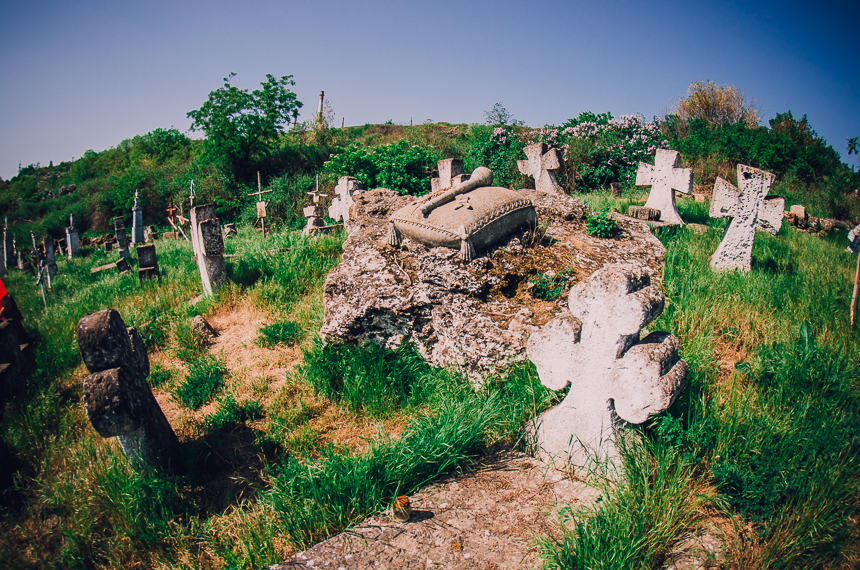
At the summit of Shkodova Hora lies another silent witness to history: the Sotnykivske, also known as Kuyalnytske, Cemetery. It is the largest preserved Cossack cemetery in Ukraine, containing more than two hundred stone crosses, the oldest dating to 1771.
The crosses vary in form—Maltese, Greek, and trefoil designs—all carved from the same coquina stone quarried below. Many bear inscriptions in Church Slavonic that recount the names of Cossacks of the Black Sea Host and their families. This site provides compelling evidence that Odesa emerged upon an already established cultural foundation rooted in the traditions of the Ukrainian steppe.
Shkodova Hora Today: A Forgotten Heritage
Today the area remains largely neglected, despite its immense potential as a cultural and tourist destination. The cave houses on Hladkova Street are gradually deteriorating under the effects of moisture and time. Some are still inhabited: modern owners have added brick verandas, transforming the rock-cut rooms into cozy bedrooms or storage spaces.
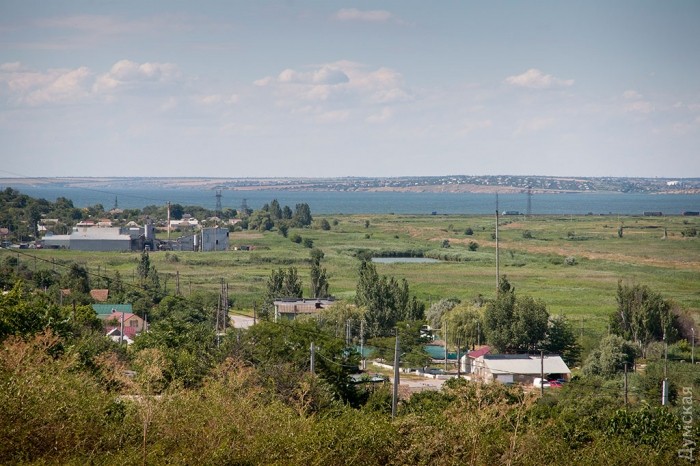
The site is often called the “Odesa Cappadocia.” Its atmosphere combines an industrial landscape—an oil refinery stands nearby—with ancient Cossack serenity and subterranean grandeur.
Shkodova Hora is the foundation of Odesa in both literal and symbolic terms. It stands as a testament to how human will and labor can transform wild rock into a home and, ultimately, into a magnificent city.
Notable Facts:
Origin of the name: The name “Shkodova” derives from the word meaning “damage” or “loss.” Due to salt marshes and swamps at the foot of the hill, the road here was so poor that traders transporting goods in ox-drawn wagons often broke their carts and lost merchandise, lamenting their misfortune.
The “Reed Tram”: Tram number twenty runs along the base of the hill. Its route passes through tall reeds and by the cave houses, creating the impression of traveling back in time.
Local lore: According to legend, one can sometimes hear the sounds of tools at work within the catacombs, even when no one is present—as though the spirits of the stonecutters continue their eternal labor.
Legends of Shkodova Hora
Shkodova Hora, where the destinies of Cossacks, stonecutters, and smugglers intertwined for centuries, inevitably became a place of mystique. When the sun sets over the estuary and the shadows of stone crosses lengthen, the hill reveals its darker side.
1. The Legend of the White Stonecutter
This is the most famous tale among urban explorers of the Odesa underground. It is said that deep within the old tunnels dwells the spirit of a stonecutter who perished in a collapse during the nineteenth century. Unlike malevolent apparitions, he is regarded as a guardian. According to legend, the “White Stonecutter” appears to those who lose their way and silently gestures toward the exit. However, those who enter with ill intent or disrespect the labyrinth may find themselves disoriented or startled by the thunderous echo of falling stones.
2. The Phantom Wagon
The road beneath the hill was historically treacherous. Elderly residents once claimed that on foggy nights, when the estuary merges with the sky, one can hear the creaking wheels of an old wagon and the muted shouts of drivers. These are said to be the spirits of traders who became trapped in the marshes and never delivered their goods. Encountering the phantom wagon was considered a bad omen, foretelling misfortune in travel.
3. The Treasures of the Black Sea Cossacks
Legend holds that the cemetery atop the hill served not only as a burial ground but also as a hidden vault. Before departing for war or abandoning the land, Cossacks allegedly concealed their gold in secret crypts beneath the stone crosses or in dead-end branches of the catacombs, sealing the entrances with rock. The treasure, it is said, will reveal itself only to one who seeks not wealth but the restoration of forgotten memory. Attempts by illicit treasure hunters have supposedly ended in failure or sudden misfortune.
4. The Power of the Trefoil Crosses
Some believe the ancient Cossack crosses possess a special energy. Local mystics claim this is a “place of power” where one loses the sense of time. According to tradition, placing a hand upon the oldest cross at dawn and asking for protection will bring ancestral guardianship. Another belief warns against photographing the crosses during a full moon, as unfamiliar faces may later appear in the images.
5. The Whispering Chimneys
Because the chimneys of the cave houses opened onto the plateau above, a legend arose about “underground whisperers.” Smugglers allegedly used these flues as an early warning system. If guards appeared near the estuary, a coded whisper sent down the chimney could be heard deep within the cave thanks to the rock’s acoustics. Today, visitors sometimes joke that if one presses an ear to an abandoned chimney, echoes of conversations from a century ago may still be heard.
Shkodova Hora is a place where the boundary between history and legend is remarkably thin. Perhaps that is why it continues to attract those who seek in Odesa something deeper than sea views alone.